Home
Solar Power for Affordable Housing through Computational Design of Low-Cost/High-Efficiency Solar Cells
This project is part of the Intro to HPC Bootcamp held in person at Argonne National Laboratory (ANL) in August 2025 and hosted by the Department of Energy (DOE) Advanced Scientific Computing Research (ASCR) Computing Facilities.
World leaders have argued that societies are transitioning into a Third Industrial Revolution (Rifkin, 2018), characterized by rapid advancements in transportation, automation, and clean energy production and storage. Electricity, as a fundamental energy source, powers a wide range of activities from transportation systems to cloud computing services. Sustainable production and storage of electricity are crucial for combating climate change and promoting more equitable societies.
Frontline communities and individuals now have the opportunity to own and control renewable energy sources, such as harvesting solar energy. Among the various types of solar cells—some offering higher efficiency and others being more cost-effective—Dye-Sensitized Solar Cells (DSSCs) present a promising technology for clean energy production. DSSCs are constructed from organic materials that are inexpensive and straightforward to manufacture. Their flexibility and lightweight properties make them suitable for use in portable devices and integration into building materials. Although DSSCs are currently less efficient than silicon-based solar cells, they offer a more affordable alternative, with the potential cost of producing 1 kWh of electricity being less than $0.10.
This project focuses on economic and affordable energy production that could contribute to energy justice by utilizing DSSCs and applying artificial intelligence to identify eco-friendly materials and address pressing environmental challenges. The study involves employing data science, visualization, and machine learning approaches to analyze a database of molecules suitable for DSSCs. Specifically, the project will explore molecular datasets, discuss data sources, identify trends, analyze molecular descriptors, and apply machine learning techniques to predict properties of unknown molecules.
This project is intended for undergraduate students with an interest in data science, renewable energy, or materials science. Prior experience in computational chemistry or data science is not required; however, familiarity with linear algebra, basic programming skills, and the Python programming language may be beneficial.
- Explore an autogenerated dataset of dye candidates for DSSCs: Investigate patterns and correlations within the data, and enhance the dataset by incorporating descriptors and molecular fingerprints.
- Visualize the data using dimensionality reduction techniques: Utilize methods such as Principal Component Analysis (PCA) or t-Distributed Stochastic Neighbor Embedding (t-SNE) to reveal patterns in molecular composition and their correlation with properties.
- Identify families of molecules with similar properties: Apply clustering algorithms to group molecules based on similarities, facilitating an understanding of structural features contributing to their properties.
- Determine molecular groups that enhance light absorption: Analyze molecular structures to ascertain which functional groups contribute to improved light absorption.
- Predict molecular properties using machine learning: Employ machine learning models to predict the properties of molecules, comparing the predictive performance and computational cost of different approaches.
- Utilize hardware acceleration for machine learning: Leverage hardware acceleration techniques to efficiently train machine learning models on large datasets.
- Compile a list of optimal dyes: Provide recommendations for dyes that effectively cover the solar spectrum, enhancing the efficiency of DSSCs.
This project integrates sustainable energy research with advanced computational techniques, contributing to the development of accessible clean energy solutions.
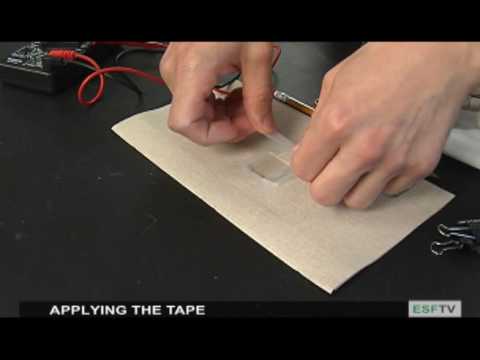
- How to fabricate a dye sensitized solar cell
- 3rd Industrial Revolution by Jeremy Rifkin
