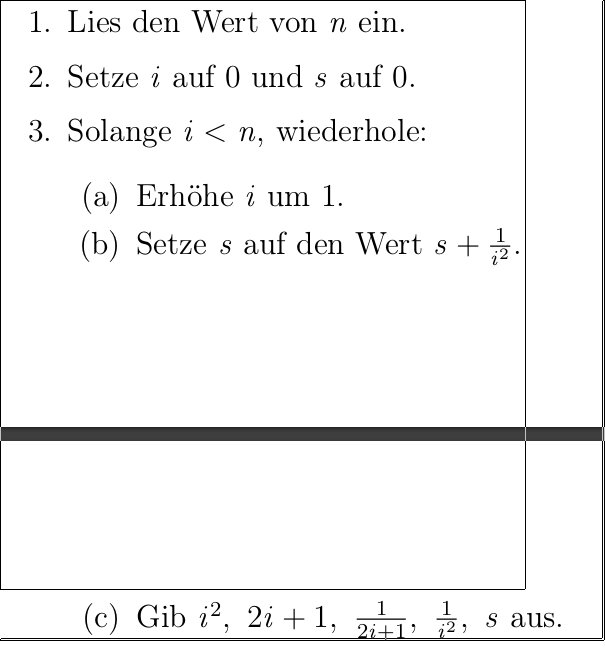
Task 1: Interpret the structure of a simple Java program with output:
class MyJava {
}
  public static void main (String [] args) {
    System.out.println ("Welcome to our Java Class!");
  }
  Standard edition:
    System.out.println ("text to be output"); System.out.println (1 + 2 + 3 + 4 + 5
    + "Numbers and Text" + 6 + 7 + 8 + 9 + 0);

Use the self-explanatory code snippets to understand the syntax and meaning of
program branches (if) and loops (while, do while, for) clear.

branch
  if (value> max) {
    max = value;
  }
  else if (value <min) {
    min = value;
  }
  else {
    System.out.println ("The value is in the interval [" + min + "," + max + "].");
  }

grind
// Head controlled endless loop
while (true) {
  System.out.println ("Echo");
}

// foot-controlled loop do {
  System.out.println ("I am unique."); } while (0> =
1);

// count loop
for (int i = 42; i> 0; i--) {
  System.out.println ("still" + i);
}
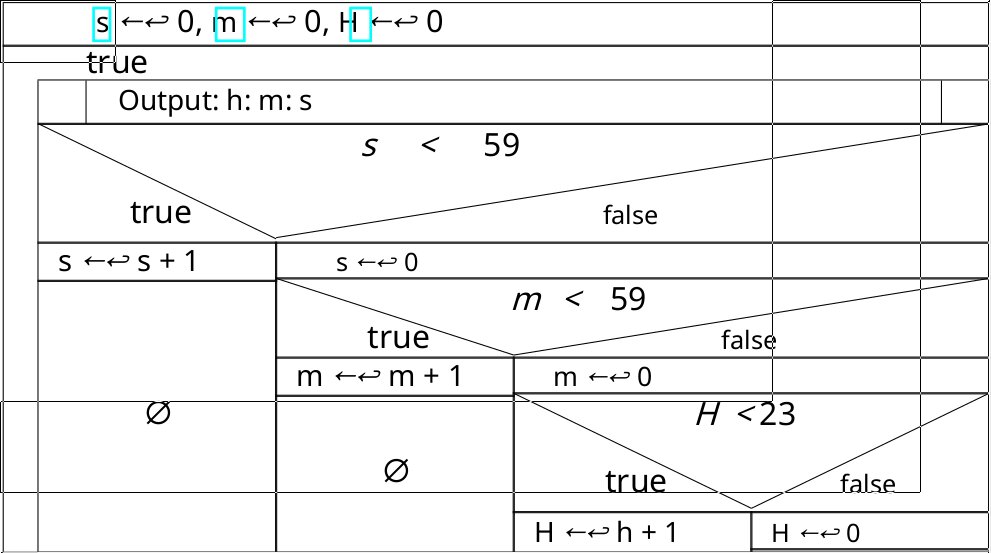
Task 2: The following Nassi-Shneiderman diagram is given. First, try to find out what is output when the algorithm is executed. Then convert the given algorithm into an equivalent Java program.
Task 3: Exercise 3: grind the algorithm