A high-performance, FFI-powered camera plugin for Flutter, built for real-time on-device vision: direct, low-overhead access to camera frames for your own ML/CV code, integrated barcode/QR scanning, and full hardware control.

Status: Active development (
0.0.x) — the API may change before1.0.0. Device-verified on Android (Pixel 8) and iOS 18: preview, photo, video recording, barcode/QR scanning, zoom/torch/focus, orientation, and mirroring.
| Preview + orientation | Barcode / QR scanning | FFI frame processor |
|---|---|---|
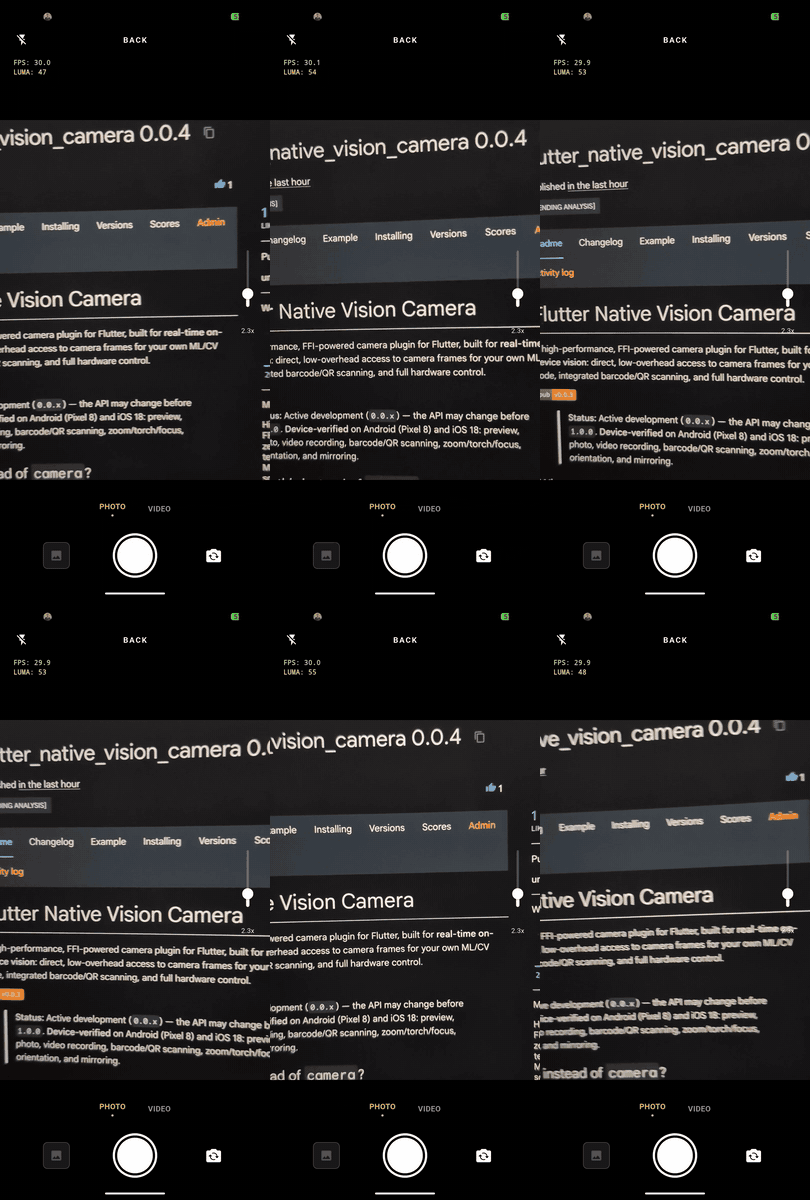 |
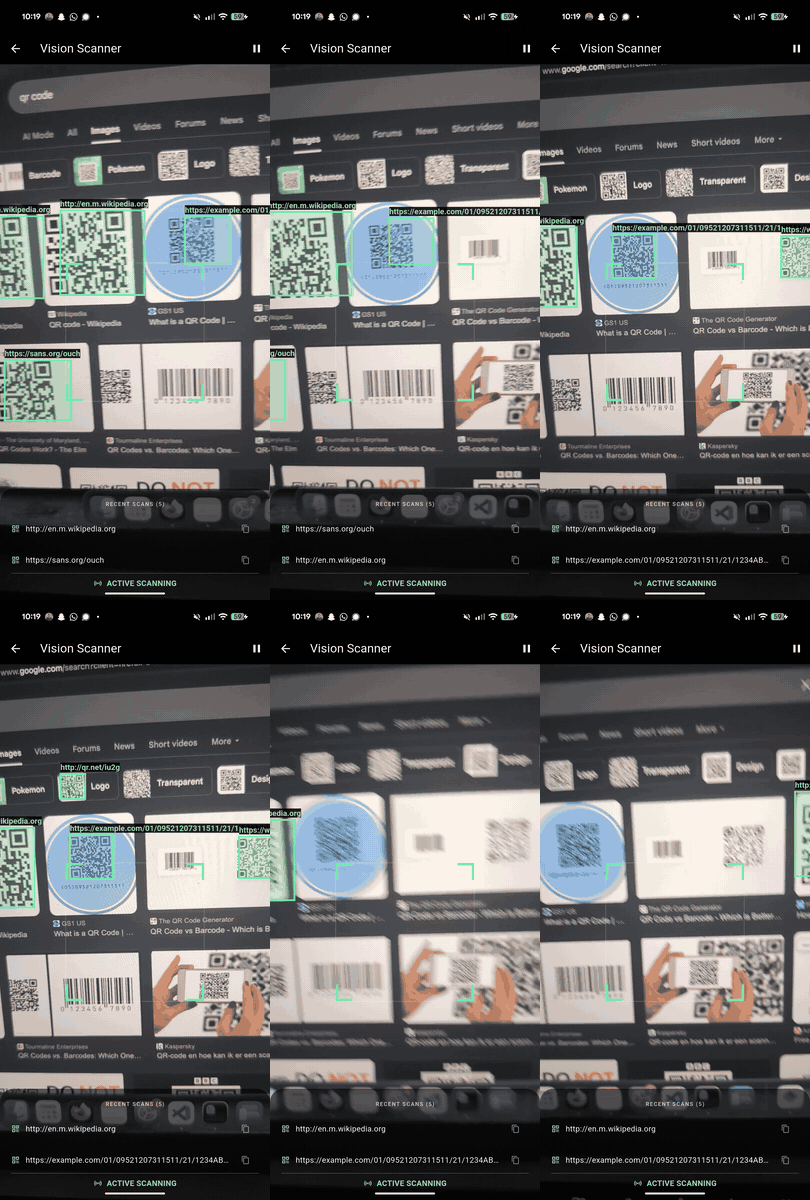 |
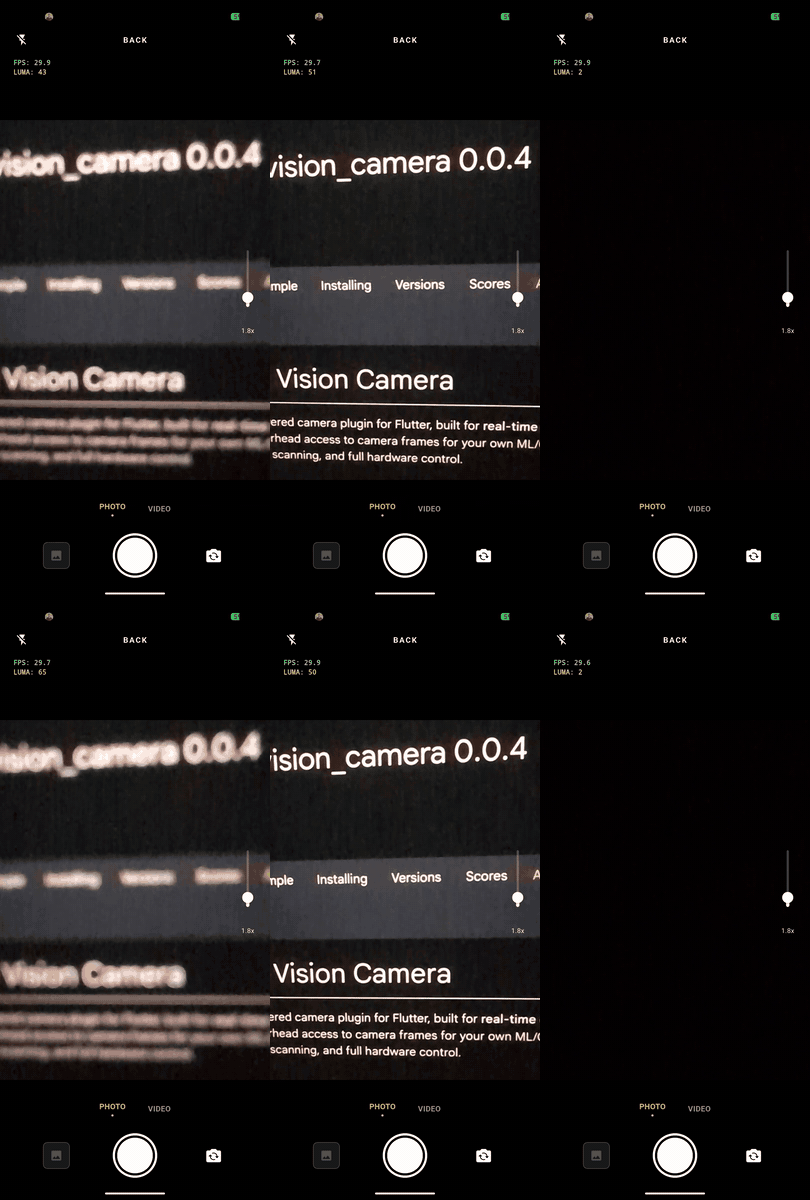 |
The official camera package is excellent for
general capture. This package targets the niche it doesn't cover: a real-time
frame pipeline where you read raw camera buffers for your own vision code,
with integrated scanning, all sharing one GPU-texture preview.
| Feature | camera (standard) |
flutter_native_vision_camera |
|---|---|---|
| Preview | Platform texture | GPU texture (Android zero-copy SurfaceProducer; iOS CVPixelBuffer) |
| Frame access | startImageStream over the platform channel (serialized) |
Direct FFI pointer access to plane buffers — no channel serialization |
| Native frame hook | — | Synchronous C/C++ plugin on the camera thread (zero-latency) |
| Barcodes / QR | Separate plugin | Integrated (Android MLKit, iOS Vision) |
- GPU-texture preview with automatic orientation.
- FFI frame access — read raw Y/U/V (Android) or BGRA (iOS) planes directly.
- Synchronous native C/C++ plugins invoked on the camera thread.
- Integrated barcode/QR scanning (Android MLKit, iOS Vision).
- Hardware controls — zoom, torch, exposure, tap-to-focus, video recording.
- Flutter ≥ 3.22, Dart ≥ 3.8
- iOS 13.0+, Android
minSdk21+ - A physical device — simulators/emulators have no real camera.
flutter pub add flutter_native_vision_cameraiOS — add to ios/Runner/Info.plist:
<key>NSCameraUsageDescription</key>
<string>This app needs camera access to capture photos and video.</string>
<key>NSMicrophoneUsageDescription</key>
<string>This app needs microphone access to record video with audio.</string>
Android — CAMERA and RECORD_AUDIO are declared by the plugin; request
them at runtime (shown below).
import 'package:flutter/material.dart';
import 'package:flutter_native_vision_camera/flutter_native_vision_camera.dart';

// Once, at startup (e.g. in main()):
initializeVisionCamera();

class CameraScreen extends StatefulWidget {
  const CameraScreen({super.key});
  @override
  State<CameraScreen> createState() => _CameraScreenState();
}

class _CameraScreenState extends State<CameraScreen> {
  final controller = CameraController();

  @override
  void initState() {
    super.initState();
    _start();
  }

  Future<void> _start() async {
    // 0. Permission (otherwise you get a black preview).
    if (await CameraPermissions.requestCameraPermission() !=
        PermissionStatus.granted) {
      return;
    }
    // 1. Pick a device.
    final devices = await CameraDevices.getAvailableCameraDevices();
    final back =
        CameraDevices.getCameraDevice(devices, CameraPosition.back) ??
        devices.first;
    // 2. Initialize + start.
    await controller.initialize(back, enablePhoto: true);
    await controller.setActive(true);
    if (mounted) setState(() {});
  }

  @override
  void dispose() {
    controller.dispose(); // Release the hardware.
    super.dispose();
  }

  @override
  Widget build(BuildContext context) =>
      CameraPreview(controller: controller, resizeMode: ResizeMode.cover);
}takePhoto() requires enablePhoto: true at init.
final photo = await controller.takePhoto();
Image.file(File(photo.path)); // photo.width / photo.height / photo.pathInitialize with enableVideo: true, then:
final dir = await getTemporaryDirectory();
await controller.startRecording('${dir.path}/clip.mp4');
// ... seamlessly zoom / toggle torch while recording ...
await controller.stopRecording();
The
mirrorflag oninitializecontrols the front-camera selfie mirror for both the preview and the saved photo/video (defaulttrue; setfalseto save what the camera actually sees).
await controller.initialize(
  device,
  codeScanner: CodeScannerConfiguration(
    codeTypes: [CodeType.qr, CodeType.ean13, CodeType.code128],
  ),
);
controller.onCodeScanned.listen((codes) {
  for (final code in codes) debugPrint('${code.type}: ${code.value}');
});Release the hardware on dispose(), and pause/resume with the app lifecycle:
class _S extends State<MyCam> with WidgetsBindingObserver {
  @override
  void initState() { super.initState(); WidgetsBinding.instance.addObserver(this); }
  @override
  void dispose() {
    WidgetsBinding.instance.removeObserver(this);
    controller.dispose();
    super.dispose();
  }
  @override
  void didChangeAppLifecycleState(AppLifecycleState state) {
    if (!controller.isInitialized) return;
    if (state == AppLifecycleState.inactive ||
        state == AppLifecycleState.paused) {
      controller.setActive(false);
    } else if (state == AppLifecycleState.resumed) {
      controller.setActive(true);
    }
  }
}Run code for every camera frame — the package's headline feature.
Three options, lightest to heaviest:
setFrameProcessor— a closure delivered asynchronously on the main isolate (viadart:ffiNativeCallable.listener). Easiest; keep the work light (FPS, brightness) or it competes with your UI.setFrameWorklet— a top-level function that runs on a background isolate for heavy work (ML/CV), with the main thread untouched. Results stream back viaframeResults. See below.- Native C/C++ hook — runs synchronously on the camera thread with zero added latency, for the very heaviest work.
await controller.setFrameProcessor((frame) {
  // FFI hot path: read pixels here for ML/CV.
  final yPlane = frame.getPlaneData(0);                 // Uint8List view
  final stride = frame.planeBytesPerRow(0);             // bytes per row (>= width)
  final avgLuma = frame.computeLuminance(0, 0, frame.width, frame.height);
});
getPlaneData(i)returns a direct view of native memory. UseplaneBytesPerRow(i)/planePixelStride(i)to walk it correctly (rows are padded).computeLuminanceis YUV/Android-only — on iOS (BGRA) it returns0.0; readgetPlaneData(0)instead.
For heavy per-frame work, run it on a background isolate so the UI never
janks. The entry is a top-level/static function (Dart can't ship a closure
across isolates). Pass model bytes via args — a worker isolate can't read
rootBundle, so load assets on the main isolate. Register onFrame, and send
results back:
// Top-level — runs on the worker isolate.
void detectorWorklet(FrameWorklet w) {
  final args = w.args as ({Uint8List model, String labels});
  final interpreter = Interpreter.fromBuffer(args.model); // tflite_flutter
  w.onFrame((frame) {
    final boxes = runModel(interpreter, frame); // heavy inference, off-main
    w.send(boxes);                              // sendable result → main
  });
}

// Main isolate:
final model =
    (await rootBundle.load('assets/model.tflite')).buffer.asUint8List();
final labels = await rootBundle.loadString('assets/labels.txt');
controller.frameResults.listen((r) => setState(() => _boxes = r as List));
await controller.setFrameWorklet(
  detectorWorklet,
  args: (model: model, labels: labels),
);
Frames cross to the worker as the same zero-copy FFI pointers (no buffer
copy). Map detection boxes onto the preview with previewRectFromFrame. The
example's Object Detector is a full EfficientDet-Lite0 worklet.
The Frame and its buffers are valid only during the callback. To use the
data later (e.g. on another isolate), either copy it out synchronously:
final bytes = Uint8List.fromList(frame.getPlaneData(0)); // owns a copy…or extend the native lifetime by balancing the ref-count exactly once:
frame.incrementRefCount();              // keep the buffer alive
// ... use frame asynchronously ...
frame.decrementRefCount(); // release it (mandatory)Detection boxes are in the frame's coordinate space; the preview is rotated (and
maybe mirrored) for display, and the two are tracked independently — so a box
drawn naively drifts as the device turns. Map it with previewRectFromFrame:
final previewRect = controller.previewRectFromFrame(
  detection.boundingBox,                      // normalized 0..1 from your model
  sourceRotationDegrees: frame.orientation.degrees, // rotation you fed the model
);
// Scale previewRect onto the preview widget's rect (use displayPreviewSize for BoxFit).
It accounts for the live previewRotation and the front-camera mirror, so boxes
stay aligned at any orientation. See the example's Object Detector page for a
full EfficientDet-Lite0 overlay.
For the heaviest work, hook the synchronous frame loop in C++ (src/VisionCamera.hpp):
#include "VisionCamera.hpp"

class BrightnessPlugin : public vision::Plugin {
public:
  const char* name() const override { return "brightness"; }
  void onFrame(const vision::Frame& frame) override {
    const uint8_t* y = frame.data();          // Y / first plane
    int stride = frame.bytesPerRow();
    // ...heavy SIMD/AI math on the camera thread...
  }
};

// Register once (e.g. from an init function you call via FFI at startup):
extern "C" __attribute__((visibility("default"))) void registerMyPlugins() {
  vision::Registry::instance().addPlugin(std::make_shared<BrightnessPlugin>());
}
Put your .cpp alongside the plugin sources; it links via CMake on Android and
the podspec on iOS. See src/VisionCamera_NativePluginExample.cpp for a full
working example.
| Capability | Android | iOS |
|---|---|---|
| Preview (GPU texture) | ✅ | ✅ |
| Photo capture | ✅ | ✅ |
| Video recording (+ audio) | ✅ CameraX | ✅ AVAssetWriter |
| Barcode / QR scanning | ✅ MLKit | ✅ Vision |
| Frame processor (Dart, main isolate) | ✅ YUV planes | ✅ BGRA |
| Frame worklet (Dart, background isolate) | ✅ | ✅ |
| Native C/C++ plugin (camera thread) | ✅ | ✅ |
| Zoom / torch / exposure / tap-focus | ✅ | ✅ |
| Manual focus distance | ⬜ | ✅ |
takeSnapshot |
⬜ | ✅ |
regionOfInterest (scanning) |
⬜ | ✅ |
| Minimum OS | minSdk 21 |
iOS 13.0 |
Legend: ✅ supported · ⬜ not implemented yet. Symbology coverage differs slightly between MLKit (Android) and Vision (iOS).
- No web / desktop — Android + iOS only.
- Off-isolate worklets (
setFrameWorklet) run heavy work on a background isolate; the simplersetFrameProcessorstays main-isolate by design (light work). Worklet entries must be top-level functions (a Dart isolate constraint). - Recording options (
RecordVideoOptions, codec/HDR) and pause/resume are not yet wired on all platforms;startRecordingtakes a path string. - Mirror is set at
initializetime (no runtime toggle yet). - Controls (
setZoom/setTorch/etc.) are no-ops untilsetActive(true). - No RAW capture / multi-camera;
takeSnapshotis iOS-only. - Planned API polish: typed
CameraException,TorchModeenum,switchCamera, richer error reporting.
Inspired by react-native-vision-camera
by Marc Rousavy — bringing the same high-performance,
low-level camera philosophy to Flutter via synchronous FFI and Texture rendering.
MIT